Real second-row geometry
Measure the narrowest cushion width, bolsters and center hump. A wide spec-sheet number can hide contours that tilt a car seat or crowd the buckle.
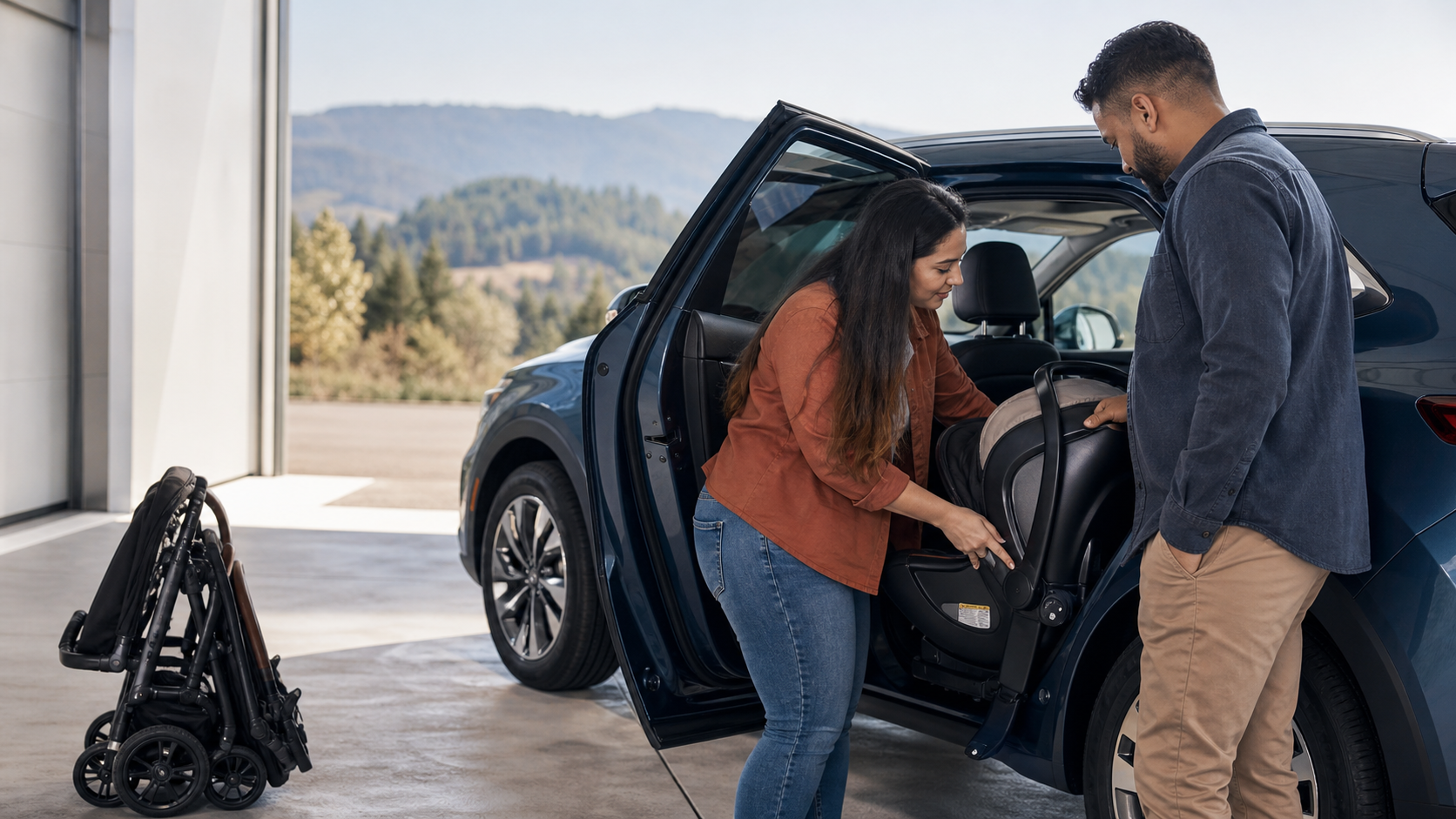
Measure before you fall for the cupholders. This practical guide helps Southern Oregon parents compare rear-seat fit, stroller room, car-seat installation, and everyday safety equipment.
Planning help—not a car-seat installation approval or vehicle safety rating.Use the outside dimensions from your car-seat manual or manufacturer. Then measure the vehicle with both front seats where the adults actually need them. This tool checks two rectangles; it cannot account for cushion shape, belt geometry or allowed contact with the front seat.
A 2023 peer-reviewed analysis of Kansas crash records for children ages 0–4 found rear-facing restraint use was associated with 9% lower adjusted odds of any injury than forward-facing use. It was an observational study, so the result is evidence—not a promise for any individual crash.
Read the study in Injury Prevention ↗A family vehicle works in small moments: reaching the buckle without climbing inside, opening a door beside another parked car, and loading the stroller while every occupied row stays usable.
Measure the narrowest cushion width, bolsters and center hump. A wide spec-sheet number can hide contours that tilt a car seat or crowd the buckle.
Find every lower and top-tether anchor in the owner’s manual. IIHS evaluates whether LATCH hardware is easy to locate and use; it is a convenience rating, not a substitute for correct installation.
Install rear-facing first, then set the front seats for both adults. Never solve a fit problem by putting the driver too close to the wheel or changing a required car-seat angle.
Open the rear door in a parking-space-sized gap. Check the roofline while lifting an infant carrier and the step-in height when a toddler climbs independently.
Load the stroller, diaper bag and groceries without folding a seat your family uses. Measure the cargo opening, floor depth and lift-over—not only published cubic feet.
Compare NHTSA crash ratings, IIHS tests and recalls for the year and trim you are considering. Ratings and equipment can change within a model line.
Age ranges overlap because children grow differently and restraint limits vary. Follow the labels and manuals for the child and seat you have.
Keep the child rear-facing until the seat’s top height or weight limit. Never place a rear-facing seat in front of an active airbag.
Use a forward-facing seat with a harness and top tether in the back seat until the child reaches its limit.
Keep using a booster until the lap belt lies on the upper thighs and the shoulder belt crosses the chest and shoulder.
Use the belt only when it fits properly. CDC guidance says children should stay properly buckled in the back seat until age 13.
Stage wording follows current CDC child passenger safety guidance.
Children’s Hospital of Philadelphia gives the most useful buying advice in one sentence: bring the child safety seat and try to install it before buying the car. Add the stroller and the adults who drive most often, and the test gets much more honest.
These current SUVs, crossovers, vans, wagons and hatchbacks give you a practical starting list. Butler has not certified any vehicle for your child restraint; bring the seat and verify the trim and seating layout in person.
This page cannot replace your manuals, pediatrician or a certified Child Passenger Safety Technician. It can help you know what to ask.
Use the top height or weight limit from the child-restraint manufacturer—not a birthday alone—to decide when the seat has been outgrown.
The AAP warns that puffy material can compress in a crash and leave slack. Buckle over thin layers; add a blanket or coat over the secured straps.
If a baby sleeps during the drive, the AAP advises moving them to a firm, flat sleep surface when you arrive rather than using the seat for routine sleep.
Heat can become deadly quickly. A rear-seat reminder is useful backup, not a substitute for checking the back seat every time.
Register a new child restraint with its manufacturer. Ask for the exact vehicle’s open-recall status and check the car-seat model too.
Oregon Revised Statute 811.210 also includes weight, height and age requirements for child safety systems and belts.
Read the current statute ↗NHTSA, CDC and AAP guidance continues rear-facing until the manufacturer’s maximum height or weight is reached.
Review NHTSA guidance ↗Published dimensions are a starting point; bring the actual car seat and keep measuring until you confirm the fit.
There is no single best body style. The right car earns strong safety ratings, accepts your specific child restraint in an allowed seating position, leaves a safe driving position for both adults, and carries the stroller and everyday gear without defeating the seating plan. Test the actual seat in the actual vehicle before buying.
Start with the car seat’s widest point and installed front-to-back reach, then measure the vehicle with the front seats adjusted for the adults who use them. Dimensions can identify unlikely matches, but contours, belt geometry, recline rules and manufacturer instructions still require a hands-on installation.
A correct installation can use either an approved seat belt or lower anchors, following both manuals. NHTSA says every car seat must be installed with one method or the other, and lower-anchor weight limits must be followed. A forward-facing seat should use its top tether when directed.
NHTSA and the American Academy of Pediatrics recommend keeping a child rear-facing until the child reaches the top height or weight limit allowed by the car seat manufacturer. HealthyChildren notes that children are flexible and leg injuries are very rare in rear-facing seats.
The AAP advises moving a sleeping baby to a firm, flat, non-inclined sleep surface as soon as practical after the trip. A properly installed car seat is for travel; it is not a routine sleep space outside the vehicle.
Oregon law requires a rear-facing child safety system for children under age two. It also sets requirements based on weight and height, including a booster-type child safety system for many children over 40 pounds who are 4 feet 9 inches or shorter, with an age-eight provision. Safer-practice guidance may go beyond the legal minimum.
Safety guidance and vehicle ratings can change. We reviewed these sources on August 16, 2026. Check current instructions for your child, restraint and exact vehicle.
Call ahead and Butler will help you choose vehicles to measure and give you time for a careful fit check.